admin
adminTop 10 Tips For Evaluating Qualified Technicians For PAT in Coventry
The ability of the tester to perform Portable Appliance Testing represents a critical factor for transforming an old-fashioned testing procedure into one that is legally defendable. As per UK legislation (specifically the Electricity at Work Regulations of 1989), there is no obligation to obtain a license for testers of PAT. Regulation 16 merely states that a person must have the "technical experience or knowledge" required to avoid injury and danger. This concept of "competence" puts the full burden on dutyholders (employers) to choose and employ technicians who prove their formal education and training, as well as real-world experience and sound judgement. Due to the lack of a compulsory certification, there are many different capacities of technicians. It is therefore essential that dutyholders understand how to prove competence beyond simply having a certification. A true qualified technician can be more than merely able to perform tests. They are aware of the basic principles of electrical security. They can interpret the results in a precise manner and take a shrewd pass/fail decision based on IET Code of Practice.
1. The EAWR 1989 definition of competence in Coventry
Regulation 16 of 1989's Electricity at Work Regulations defines the legal obligation. It says that employees need to be competent to avoid injury and danger. HSE defines competence as "the ability for a person to finish a task without placing themselves at risk or putting others at risk." In the case of PAT testing, it's an amalgamation of three parts: adequate understanding of electrical theory (theory) as well as sufficient practical experience (practical applications) as well as a thorough knowledge of the systems (specific appliances and environments they work in). Technicians must possess these three elements in order to be considered legally proficient.
2. The formal qualifications must be accompanied by a demonstrable level of competence. in Coventry
While formal education isn't legally required, it provides the best way to demonstrate understanding. The City & Guilds 2377 qualification ("In-service Inspection and Testing of Electrical Equipment") is the most widely-respected standard in the industry. However, possession of this certificate alone does not necessarily mean that you are competent; it is a combination of the practical expertise. The person who is in charge will consider both the relevant qualification and evidence of practical experience. A technician who does not hold any formal qualifications would have to show evidence of a vast amount of experience and expertise to be deemed competent.
3. The City & Guilds 2377 Qualification Defined
The City & Guilds 2377 is a Level 3 qualification that assesses the candidate's understanding of the IET Code of Practice and their ability to carry out inspections and tests correctly. The qualification is split into two sections namely 237777 (theory multiple-choice examination) as well as 237778(practical assessment). The complete award proves that the technician was independently assessed on both their understanding and their practical abilities. Asking for the certificate's number is an excellent way to confirm this qualification.
4. Practical Experience with Hands On Experience is Essential in Coventry
It is not enough to know the theory. You must also be competent to put it into action. A skilled technician should have an extensive experience of testing a wide variety of appliances across different environments. This lets them spot subtle faults in appliances that an untrained person might miss. This also allows them to perform their work safely and efficiently in complex environments, like industrial facilities or construction sites. To determine the skills of a technician a dutyholder can ask about their work experience and the types of places the test subject has worked on.
5. The IET Code of Practice is essential for in-service inspection and testing
The IET Code of Practice, or Code of Practice for PAT Testing, is the standard for PAT testing. A certified technician must not just possess a copy, but also have an in-depth understanding of its contents. This includes knowing the various equipment classifications, the required sequence of visual inspection and tests, the correct application of test instruments and, crucially the criteria for passing or failing results. Their ability to apply and refer to this guideline in a correct manner will be the most important indicator of their professionalism.
6. Equipment calibration and understanding of Test Instruments
A competent technician understands the importance of their testing equipment is essential to achieving accurate results. It is important that they are aware that their PAT test equipment needs to be calibrated by an accredited UKAS laboratory on a regular basis (typically every year) to ensure that the readings are accurate. They should have a valid calibration certificate for their equipment. Additionally, they should know how to use the device correctly, carry out daily checks on the user (e.g. or an ad-hoc test), and interpret the results it provides rather than just relying on blindly recording numbers.
7. Capacity to Conduct Meaningful Visible Inspections in Coventry
Visual inspections can reveal 90% of all faults. Highly skilled technicians place the highest importance on this aspect and is meticulously examining plugs and cables, connectors, and casings for damage, wear or indications of excessive heat. They are also able to correctly connect a plug that has the proper fuse rating. They might skip this step or rush it using an electronic tester. It's a major failure of duty.
8. Judgement and Decision-Making: Interpreting Results and Applying Pass/Fail Criteria in Coventry
The tester is only able to provide readings, the technician makes the final judgement. The ability to interpret readings within the context of IET Code of Practice pass/fail limitations and the appliance is a mark of competence. For instance, they need to be aware of when a slightly higher insulation resistance reading is acceptable, or when an earth continuity reading is acceptable but could actually indicate an issue that is not apparent on an appliance of a particular type. The true importance of a trained technician is their decision-making ability.
9. Problems with Liability and Insurance in Coventry
Although it is not required by law the skilled technician should at least have Public Liability Insurance (e.g. PS2-5 million). This will protect the customer in the case that the actions of the technician result in property damage when testing. Enlisting a technically competent technician can strengthen the dutyholder's legal defense. It proves that every reasonable step was employed to secure a suitable candidate.
10. Documentation and Communication Skills in Coventry
The test process is ineffective without clear, accurate documentation. A certified technician should create complete, clear report and asset record that precisely identify each appliance and document every test result. They should also clearly state the pass/fail results. They should also have the ability to effectively communicate with dutyholders. This involves educating them on any faults discovered, the associated risks and necessary actions to take. Communication is a crucial aspect of safety. Have a look at the top rated Coventry portable appliance testing for more recommendations.

Ten Suggestions For Service Contracts On The Maintenance Of Fire Extinguishers in Coventry
It is important to consider more than just the cost of a fire extinguisher service contract when deciding on this option. In the UK regulatory context, governed by Regulation Reform (Fire Safety) Orders of 2005, service contract is the official procedure by which the responsible person fulfills their legal duties to ensure the safety of firefighting devices. A well-structured contractual agreement ensures compliance, as well as setting clearly defined responsibilities between the parties. A poorly drafted contract can cause false safety, unintentional liability, or even compliance gaps. Knowing the complexities of these agreements, ranging from service pricing and inclusions, to termination clauses and liability limitations is essential to selecting a partner that will not only maintain equipment, but also take on the legal obligations.
1. Different types of contracts: Full-Compliance or Time-and-Materials? in Coventry
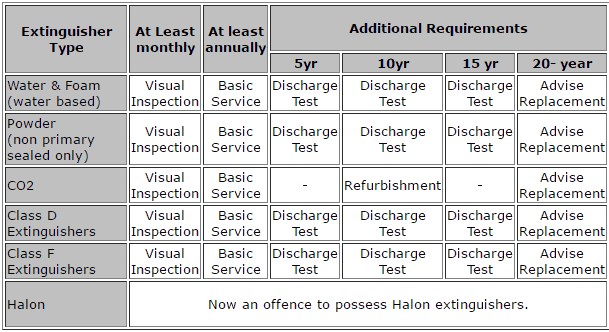
Understanding the design of your contract will allow you make informed choices. The most comprehensive choice is an inclusive or full-compliance Contract. For a fixed annual cost the provider takes on responsibility for all scheduled services (annual, 5 years or 10 years), including parts, labor and refill agent. The provider schedules visits proactively and ensures that all work is documented. This approach provides certainty for budgets and reduces the risk of sudden and unexpected cost of service to the service provider. In contrast, a Time-and-Materials or Call-Out contract typically provides the basic annual service. Additional work such as repairs or a 5-year discharge test is cost-per-hour. It can result in unpredictable expenses, and you may require more detailed procedures.
2. Pricing Structures and Transparency
A contract that has a good standing will come with a transparent pricing structure. Check that the breakdown of cost is clear in the quote. Is the cost per extinguisher be identified by type? Do you have distinct line items for annual service and an estimate of the cost of future extended services, if it is not included in the cost? It is crucial to determine any hidden charges. It is important to inquire about mileage charges as well as call-out fees, administrative costs, and the cost of replacing extinguishers that have been damaged or are obsolete. Transparency in the quote will allow budgeting to be precise and creates confidence.
3. Scope of services: what is included (and not)?
This is the essence of what the contract all about. The contract should clearly state the items included. What is included in the price?
All basic annual services?
Five-year extended service (discharge testing for foam, water and powder). in Coventry
All 10 years of overhauls and CO2 pressure testing? in Coventry
Replacement of parts (seals or hoses, as an example pins, valves or seals).
Refill agent (powder and foam concentrate) in Coventry
Can I borrow equipment from a repairer during an extended repair? in Coventry
Also important is a concise list of excluded items for example, the replacement of stolen or vandalised units, or repairs needed because of malicious damage.
4. Service Scheduling and Visit Protocols
The contract must define the obligations of the provider regarding scheduling. Who will they contact to arrange the annual appointment? What time in advance will they notify you? What's the protocol for an engineer's arrival? Will they be reporting to the reception desk or will they require assistance? The report should also outline the estimated duration of an average service visit dependent on your building's dimensions, as well as the procedures for completing service in the most minimal interruption to your business. This is essential in areas that are prone to traffic such as retail stores or hospitals.
5. Documentation and delivery of certification in Coventry
Documentation isn't just an extravagance; it's a legal requirement. The contract must state explicitly the kind of documentation to be provided and the date it is due. Each service must result in the form of a thorough Service Report, which includes the equipment that was serviced, as well as the nature and amount of the service offered, along with any suggestions made or issues discovered. This is your main proof of compliance, and must be provided promptly. The contract should also state the format (e.g. digital PDF, access to an online portal, hard copy) and the person to whom it should be delivered to.
6. Repair and Resolving Equipment Issues Policy in Coventry
A crucial clause describes the procedures for handling damaged equipment. What is the definition of the service provider of "beyond economic repair"? What is the provider's process for reprimanding a fire extinguisher. The contract should specify clearly who is responsible for replacement cost. If there is no exclusion (such as theft), this information should be stated in the contract. The terms must also specify the period for providing and installing a replacement to ensure that your premises aren't left unprotected for an extended time.
7. Emergency and Reactive Work Response Times in Coventry
The emergency is not scheduled. The contract should outline the service's obligation to respond to urgent matters for example, vandalism or an accident discharge. Does the company have a designated phone line? What are the guaranteed time to respond for a callback and for an engineer to visit the at the site? These terms can be categorized based on severity and could result in additional charges for specific contract types.
8. Insurance and Liability Indemnities in Coventry
This is an essential legal protection. The contract needs to set the limits for the company's Public Liability Insurance, e.g., 5 or 10 million pounds sterling as well as Professional Indemnity Insurance. You must ensure that the insurance of the provider is up-to-date and in good condition. Additionally, you should review the clauses that restrict their liability. While it is standard to limit liability at the amount of the contract, you need to be sure this is fair and that they remain fully liable for negligence or failure to meet their obligations according to the stipulated standard, which could result in an infraction.
9. The contract's duration as well as renewal and termination clauses in Coventry
Be aware of what you're signing up for. Is the contract an annual roll-over contract or is it locked in for a long-term period for example, 3 or 5 years? What are the notice periods to terminate the contract? Do you have penalties if you terminate early? The renewal agreement must specify that the provider won't automatically renew the contract unless there is a new quotation. Also, you must have the right to terminate for breaches of contract, such as consistent non-attendance or inability to provide a certificate.
10. Clauses on Assignment and Subcontracting in Coventry
Be sure to read any clause that permits the service provider to transfer the contract to a different company or subcontract the work. Although subcontracting may be common but it is essential to make sure that the contract stipulates that any subcontractor must have the same level certification (e.g. the BAFE Sp101) and insurance coverage that is the same as the primary provider. This ensures that the standard and compliance of the services are assured regardless of who is performing the work, thereby protecting you from a dilution of quality and standards. Read the most popular Coventry fire extinguisher checks for site advice.